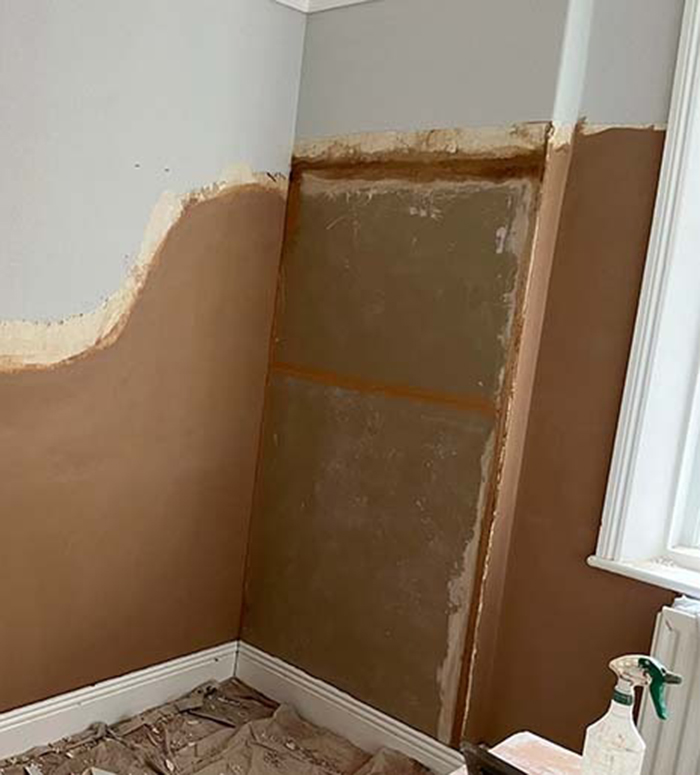
Penetrating damp can appear at any level. It is most common with solid walls where porous masonry allows rainwater to pass through, also walls with cavity fill insulation or incorrect insulation can suffer with the same problems, water can pass through the insulation onto the inside brickwork resulting in plaster getting wet. In none-filled cavity walls brick ties can make a perfect bridge for water to travel across.
Spalled bricks are a sign of porous brickwork, moisture entering a brick causes surface damage to the brick making a weak point for weather. This process is known as spalling. If you have any damp problems in your home call 07719 879751 for a free quotation or email robert.w.j.smith@live.co.uk
Normally this kind of damp has an obvious cause:
Porous brickwork or stonework
Poor pointing
Leaking gutter
Defective down pipe
High ground level
Treatment for penetrating damp is finding the root of the problem on the outside of the building before changing any rainwater damaged plaster.
In some cases just a bit of general maintenance is needed to correct the problem, however porous brickwork or stonework may need protection to repel rainwater off the building, spalled bricks or rotting stone is best to be changed before any protection is applied to the building.
Rainwater damaged plaster should be replaced, salts can be left in the masonry from the rainwater that pull moisture from the air, this can cause a similar damp problem to appear on the plaster. Salts pulling moister from the air are termed Hygroscopic. When re-plastering a membrane is needed to separate the masonry from the plaster, this allows the plaster to dry quick away from damp masonry and without any salts contaminating the new plaster from the masonry.

© Copyright 2026 | Privacy Policy
